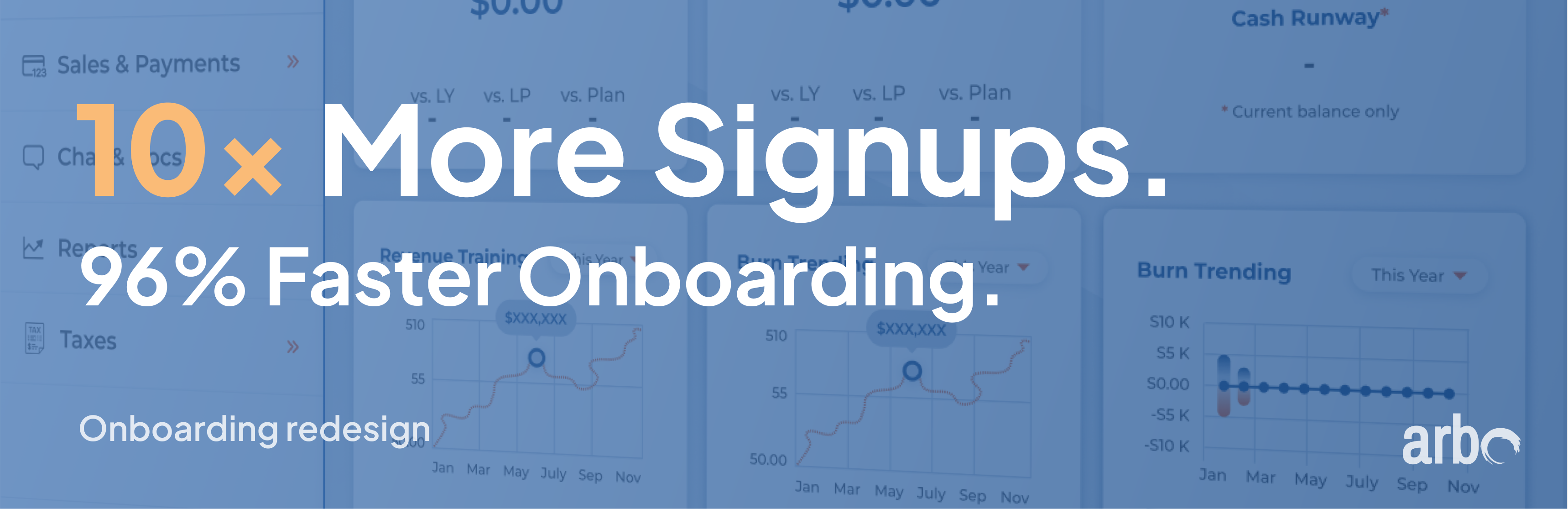
Replaced a founder-led, 60-minute onboarding model with a scalable 2-minute self-serve flow - eliminating Arbo’s growth bottleneck.
Signup volume
Reduction in onboarding time
Completion Rate
When I joined Arbo, onboarding worked exactly as designed. Every new customer booked a call with the COO, who walked them through the platform personally and collected financial information upfront.
It created strong early relationships and ensured that every new account was highly qualified.
It also capped growth at three to four signups per week - the maximum one person could facilitate.
Growth wasn’t limited by demand. It was limited by a calendar.
Arbo had grown through trusted relationships and a carefully controlled process. Opening the platform publicly felt like giving up that control.
This wasn’t a usability debate. It was a risk debate.
I argued that financial gating wasn’t protecting quality - it was protecting a habit.
I framed it internally as asking diners to pay the maître d’ before they’d seen the menu.
If users couldn’t experience value first, Arbo would remain stuck in a one-at-a-time sales model.
I mapped a revised self-serve onboarding flow and walked the founders through exactly how it would work - visually, not theoretically.
Once the shift was approved, I rebuilt onboarding around reduced commitment and increased momentum. Then I instrumented the full funnel in Mixpanel to define success before launch.
We tracked:
If the model scaled, we would see it immediately.
Facilitated onboarding
Financial commitment upfront
Limited by COO availability
3–4 signups per week
Self-serve onboarding
Value before commitment
Scalable acquisition
30+ signups per week
Time to completion dropped from 45 to 60 minutes to under 2 minutes.
Completion rate reached 87 percent.
Weekly signups increased from three to over thirty within the first month.
For the first time, Arbo could share a public signup link. The bottleneck was gone.
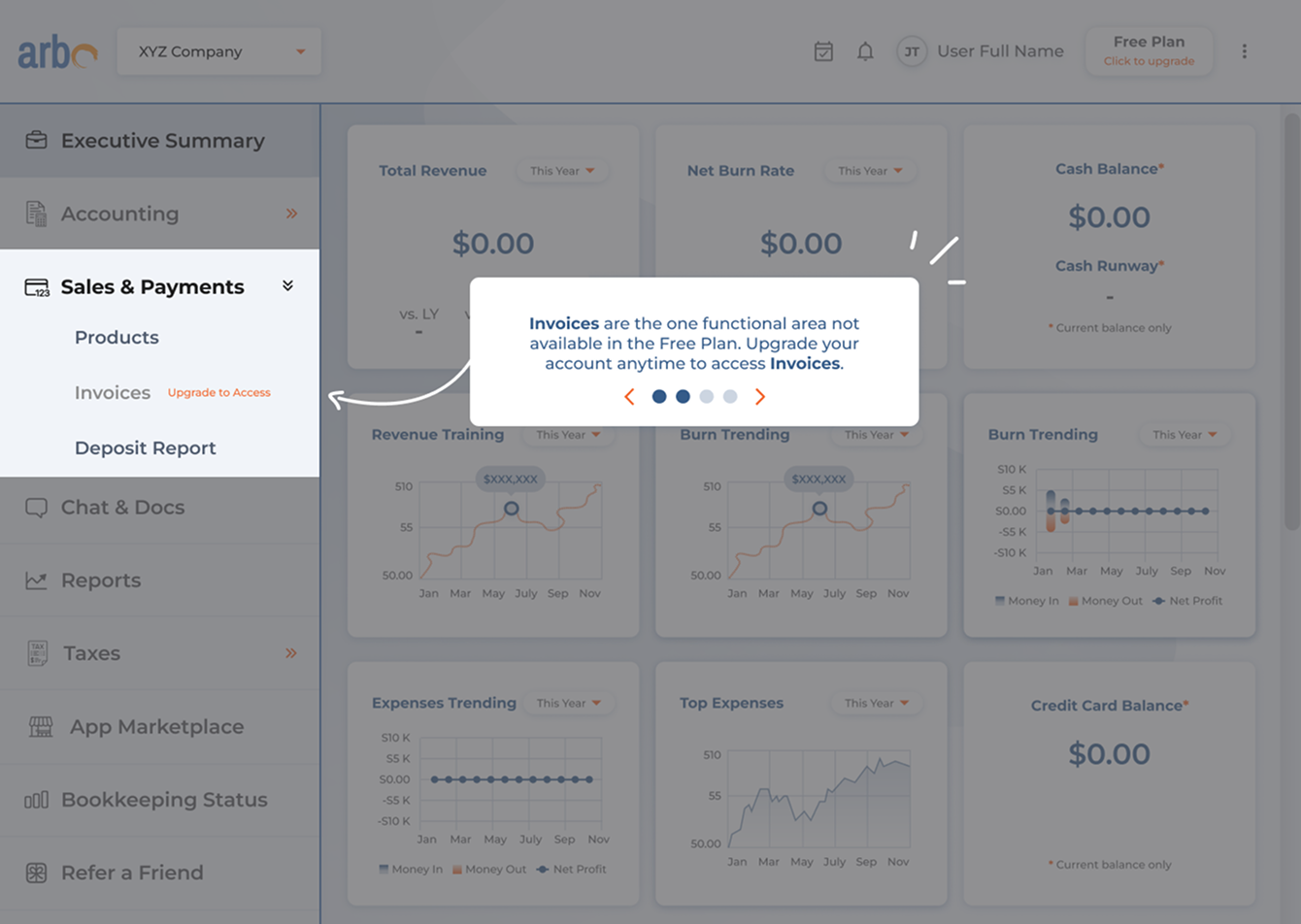
Self-serve onboarding integrated directly into the product, guiding users to first value without manual intervention.
Not every new signup was as qualified as the COO’s hand selected prospects.
Free to paid conversion per user decreased.
But volume increased 10 to 15 times, and overall revenue growth accelerated significantly.
We traded exclusivity for scale. Scale won.
If I were approaching this today, I would model revenue sensitivity earlier. I would project how much conversion could drop before scale stopped compensating.
The decision to remove financial gating was correct. Quantifying the break even threshold upfront would have strengthened the strategic conversation even further.